How it works
How selling surplus wire works
Three steps, one written agreement per lot. No verbal offers, no implied pickup, no promise that every reel is accepted.
Sell your surplus wire — request a quote Call +1 (614) 715-3047
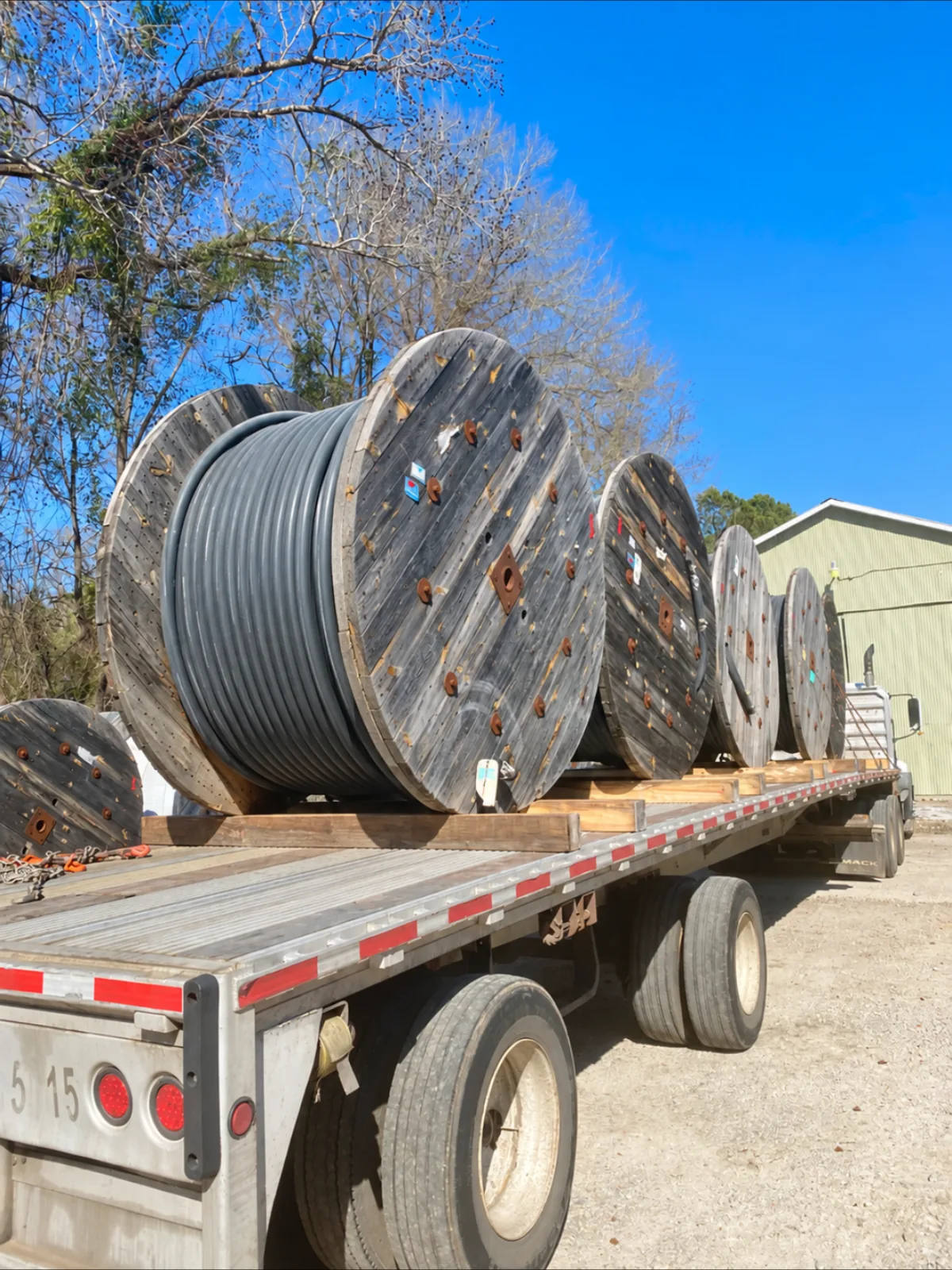
There is no clever process here. A lot is submitted with photographs and details, it is reviewed on its actual specifications, and if it is accepted the terms are written down before anything moves. What follows is the detail behind each step, including the parts that usually cause delay.
Step one: submit the lot
The form asks for the minimum a review needs: who is selling, where the material sits, what it is, how much, what condition it is in and how it could be loaded. Photographs are the part that matters most. Three photos per group beat a paragraph of description:
- The reel tag or carton label, photographed square on so the numbers are readable.
- The jacket print along the cable, showing type, size, voltage and conductor count.
- The material itself — full reel, part reel, coil or pallet — plus any damage.
If you have an inventory export, send it. A distributor's spreadsheet or a plant's store-room list is the fastest possible submission.
Step two: inventory review
The material is assessed on construction and identification, condition and storage history, quantity and footage, and the practical logistics of moving it. That last point is not a formality: a documented reel that cannot be loaded is not a lot anyone can buy.
Where material cannot be identified, the review says so. Where a partial reel has no measurable length, the review treats it conservatively. Where a lot is a mix of usable and recoverable material, it is often reviewed in two parts rather than one blended number.
No offer exists until it is written down. Nothing in a phone call or an email exchange constitutes acceptance of a lot, a price or a pickup date. Each transaction is confirmed in writing with price, payment timing, freight responsibility, loading responsibility and pickup arrangements.
Step three: written terms and logistics
If the lot is accepted, the terms are set out in writing for that specific material. That includes who pays freight, who loads, what equipment is needed, what happens if the material differs from the description on arrival, and when payment is made. Those terms are the agreement; they are not a general policy applied to every seller.
What we do not do
- We do not promise top-dollar pricing, same-day offers, free freight or guaranteed pickup.
- We do not accept every type of cable, and we do not accept material we cannot identify.
- We do not buy transformers, switchgear, breakers, MCCs, generators, bus plugs, chillers or machinery.
- We do not encourage removal of cable that has not been released by its owner.
Ownership and authorisation
The form asks you to confirm that you own the material or are authorised by the owner to sell it. That is not a formality either. Plant closures, construction contracts and warehouse liens all create situations where the person holding the cable is not the person entitled to sell it, and the review relies on your confirmation before anything proceeds.
Timing, realistically
A complete submission with readable photographs usually gets a faster response than an incomplete one, and a small well-documented lot moves faster than a large undocumented one. Freight scheduling depends on the site's access rules and the equipment needed, not only on the review.
Questions sellers ask
Questions about this material
How long does a review take?
It depends on how complete the submission is. A documented lot with readable photographs is reviewed faster than a pile of unidentified reels, and a large mixed inventory takes longer than four tagged reels.
Who arranges freight?
That is agreed per transaction and written into the terms for that lot. It is never assumed, and it is never described as free unless it genuinely is part of the agreed terms.
What if the material is not what was described?
Then the written terms govern. That is why the terms specify what happens when the lot on the ground differs from the submission, and why photographs matter so much at the start.
Keep reading
Quote request
Sell your surplus wire — request a quote
Describe the lot as it actually sits. Photos of the reel tag and jacket print do more than any description, and mixed or unidentified cable can still be submitted for review.
Ready to start at step one?